Planting Near Natural Gas Easements
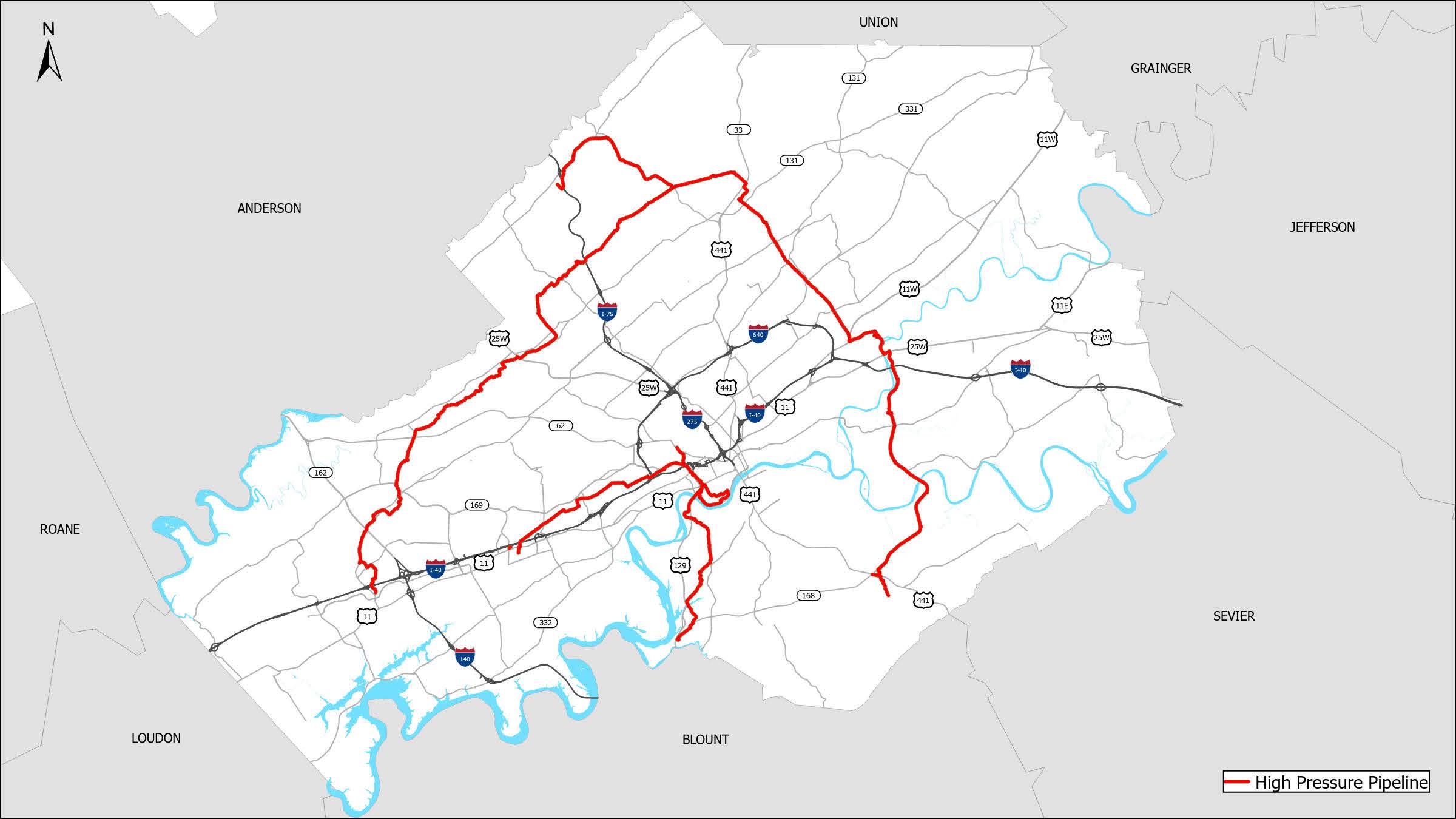
KUB has roughly 90 miles of high- and medium-pressure natural gas mains throughout its system, with a portion of these running through customer properties in easements.
Easement agreements are legally recorded documents that ensure KUB has the right to safely install, operate, maintain, inspect, and access areas above pipelines. These agreements remain in place when property is bought and sold.
To help ensure safe and reliable natural gas service, KUB limits what can be planted within a natural gas easement. Keeping easements clear allows access to the natural gas main for maintenance, repairs, routine inspections with ground and aerial equipment, and for construction when infrastructure replacement is required.
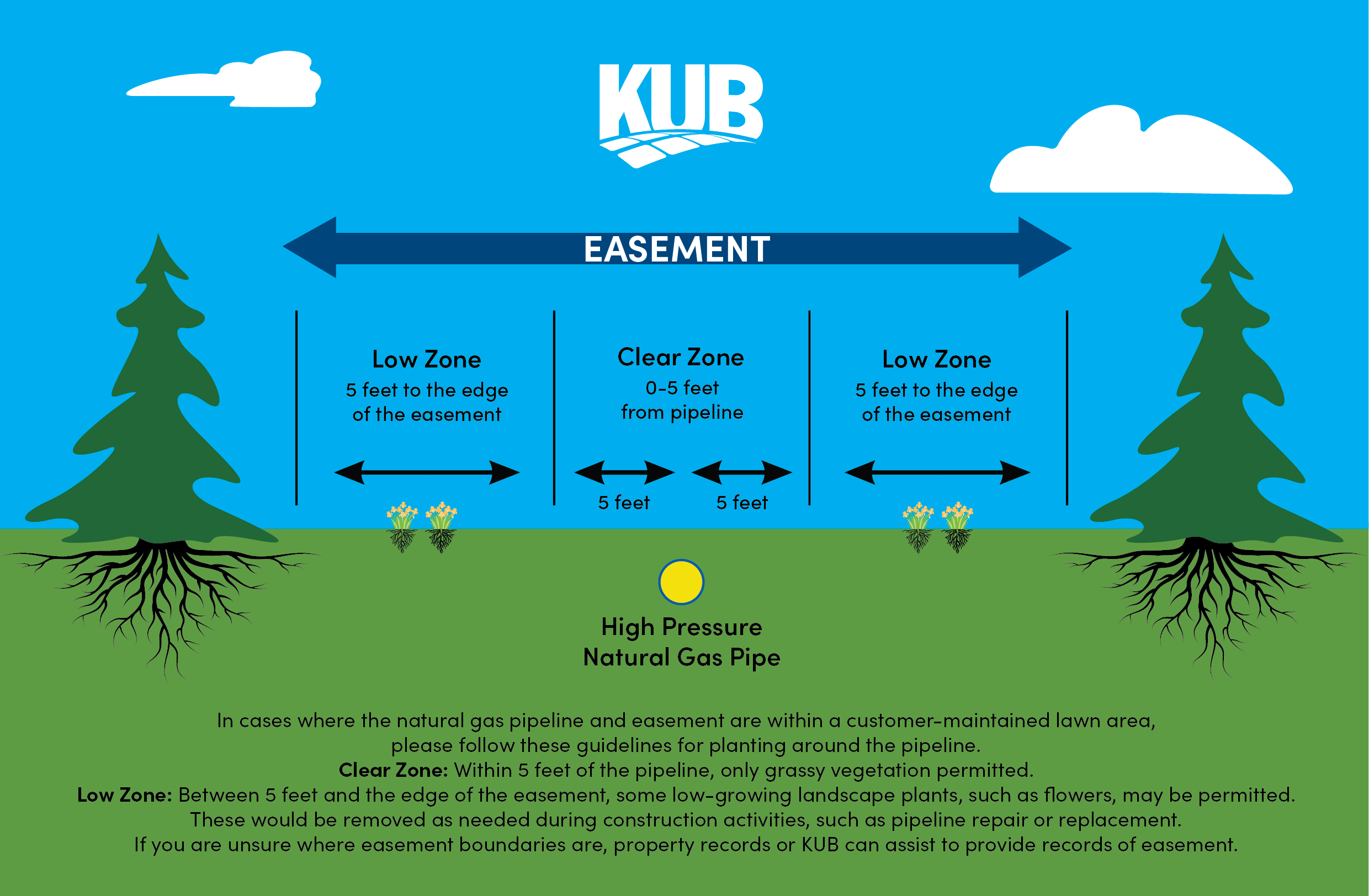
In cases where a natural gas pipeline and easement are within a customer-maintained lawn area, follow these guidelines:
- Clear Zone: Within 0-5 feet of the pipeline, only grassy vegetation is permitted.
- Low Zone: Between 5 feet and the edge of the easement, some low-growing landscape plants, such as flowers, may be permitted.
These would be removed as needed during construction activities, such as pipeline repair or replacement. If you are unsure where easement boundaries are located, property records or KUB can assist.
Below are additional guidelines customers should follow when planting near a natural gas pipeline:
- Call 811 prior to digging to determine the location of the pipeline.
- Large plants, like trees and shrubs, must be planted outside of the easement due to their large root stuctures and to allow clear inspection, maintenance, and construction. Please ensure the canopy and root system will not extend into the easement once the plant reached maturity.
KUB performs routine inspections of natural gas pipeline easements to ensure they remain clear. KUB will remove landscaping that violates the guidelines above. Additionally, KUB will not replace landscaping it removes from an easement.

Customers must call 811 before digging on their property to have underground utilities marked for free.
Frequently Asked Questions
Is the natural gas pipeline in the center of the easement?
No, natural gas lines do not always fall directly in the center of the easement. They may be placed in different parts of the easement depending on initial design considerations, construction limitations, and other factors.
You should call 811 to verify the location of a natural gas line on your property.
I see a pipeline marker on my property. What does it mean?
Natural gas pipeline markers are located throughout KUB's service territory along the route of buried pipelines. These markers are generally placed in easements where the pipeline intersects a roadway, railroad, creek, or river; however, they may also be located where natural gas pipelines cross open land.
Markers provide a visible indication that a buried natural gas pipeline is located nearby, but they do NOT indicate the exact location of the pipeline. Never rely solely on a marker to indicate the presence of a buried natural gas pipeline.
Always call 811 before any excavation to have buried utility lines located and marked for free. If you suspect a leak is present in the vicinity of one of these pipeline markers, leave the area and immediately call KUB at 865-524-2911. It is a federal crime to willfully deface, damage, remove, or destroy any pipeline marker.
I see a pipeline marker that has been damaged or knocked down. What should I do?
It is a federal crime to willfully deface, damage, remove, or destroy any pipeline marker.
If you identify a pipeline marker of concern (that may have been damaged or knocked down), please contact KUB at 865-524-2911.
If you suspect a leak is present in the vicinity of one of these pipeline markers, leave the area and immediately call KUB.
Can I install a fence if I have a KUB easement on my property?
Fences are reviewed on a case-by-case basis to see if they inhibit access needed for maintenance or emergency response. Property owners should be mindful that fences within easements may require removal for natural gas system maintenance, repairs, and for construction when infrastructure replacement is required.
If you would like to install a fence in an easement, contact KUB at 865-524-2911.
Can I add trees, bushes, shrubs, plants, or flowers on or around an easement on my property?
No landscaping is allowed within 5 feet of the natural gas pipeline; only grassy vegetation is permitted in that space. Small plants, like flowers, can be planted 5 feet from the pipeline to the edge of the easement.
Large plants, like bushes, shrubs, and trees must be planted outside of the easement because of root structures and to allow clear access for inspection, maintenance, and construction. Property owners should research plant selection and make sure the canopy and root system will not extend into the easement as the plants grow.
In all cases, property owners should know that the plants will have to be removed when pipeline maintenance, repairs, or replacement is required.
How do I know if there is a pipeline easement on my property?
Property owners may review their recorded easement documents by contacting their local Register of Deeds Office. KUB will also send annual letters to property owners with high-pressure natural gas pipelines nearby. Pipelines are also typically identified with pipeline markers, however, markers are not placed on every property along the pipeline.
KUB's Natural Gas Pipeline

Avoid Damage to Underground Utilities
Customers can help prevent service interruptions by calling 811 before digging in their yard.
Learn MoreNatural Gas Safety
Natural gas is a safe, clean, and affordable source of energy in our community, but like any fuel source, it has to be used carefully.
Learn More