Plant Smart
KUB is proud of its Vegetation Management Program and the work it does to maintain safe and reliable service, as well as healthy landscaping. Customers can help KUB get this process off to an early start by planting the right tree in the right place.
If a customer plans to plant a tree in their yard, they can help reduce power outages and underground service interruptions for themselves and their neighbors by following these simple steps to smart landscaping:
Choose The Right Tree
Before making a selection, be sure to determine how tall and wide the tree will be at maturity and how deep the root system will be.
Select a native plant, which will require less water, fertilizer, and pesticides to maintain. View a list of native plants and trees.
Choose The Right Spot
Planning out landscaping projects can help prevent service outages in the future.
Remember to look up to make sure trees will be clear of any power lines. Pick a spot based on the mature size of the tree to ensure there will be enough clearance as it grows as well as making sure its root system will not affect underground utilities. If a customer is planting near a high pressure natural gas easement, ensure the tree canopy will not grow over the easement.
KUB crews may need to remove trees or other plants in utility easements or maintenance zones during maintenance, repairs, or replacement of infrastructure. KUB does not replace any obstructions that have to be removed.
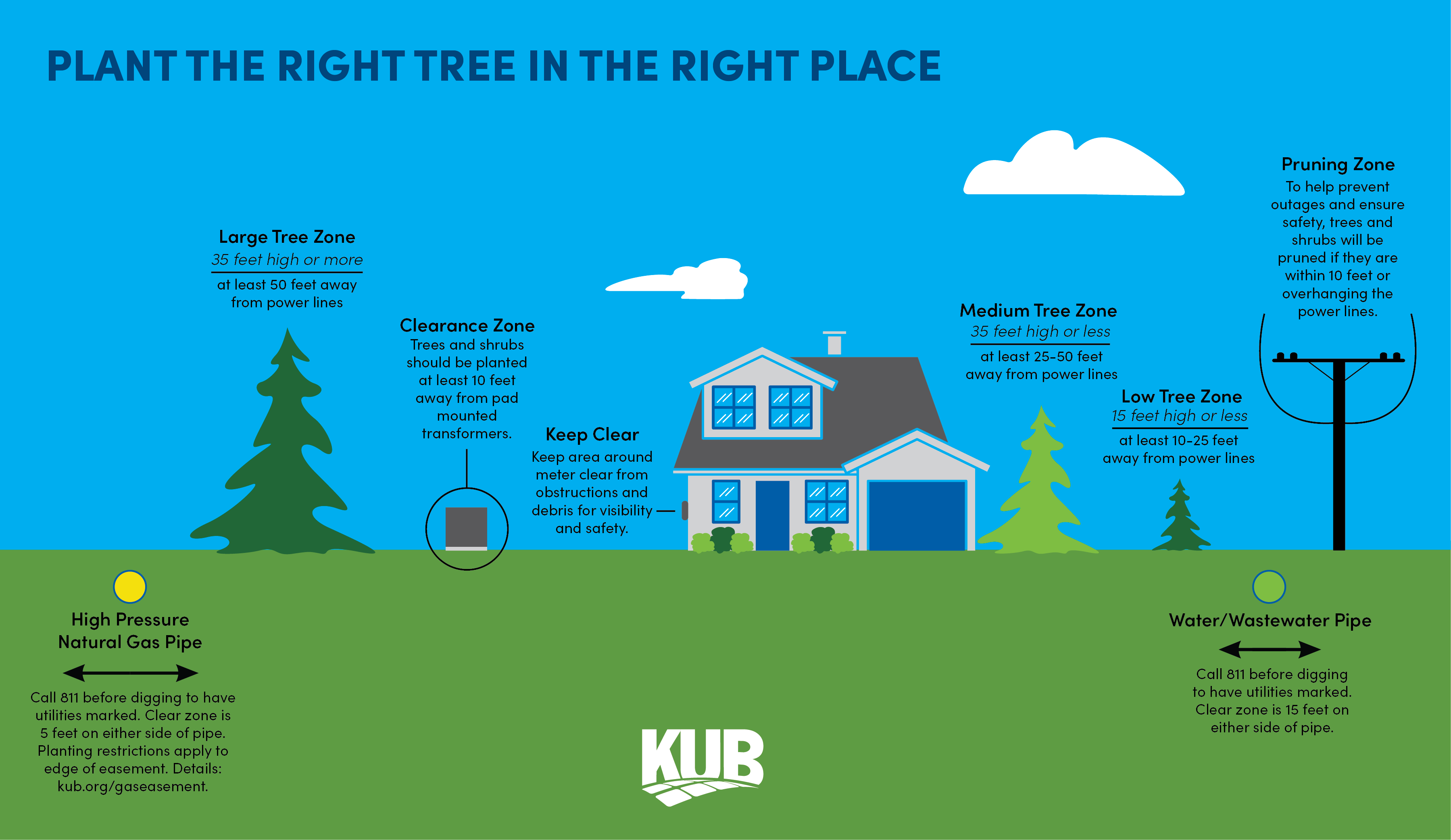
KUB has water, wastewater, natural gas, and electric infrastructure buried throughout its system.
It is important for customers to know where and how wide the easement is on their property before planting any landscaping. Easements can vary. Always verify the size of the easement and the location of the utilities within the easement before planting.
If customers are unsure where easement boundaries are, property records or KUB can assist to provide records of easement.
To avoid conflicts with utilities, do not:
- Plant large landscaping within a natural gas easement. Some small plants may be allowed within easements crossing through customer-maintained lawn areas. In all cases, property owners should be mindful the plants will have to be removed when pipeline maintenance, repairs, or replacement is required.
- Plant landscaping within 15 feet of water and wastewater mains.
- Plant landscaping within 10 feet of pad mounted transformers.
Allow room for plants to grow and still meet the clearance requirements at maturity.
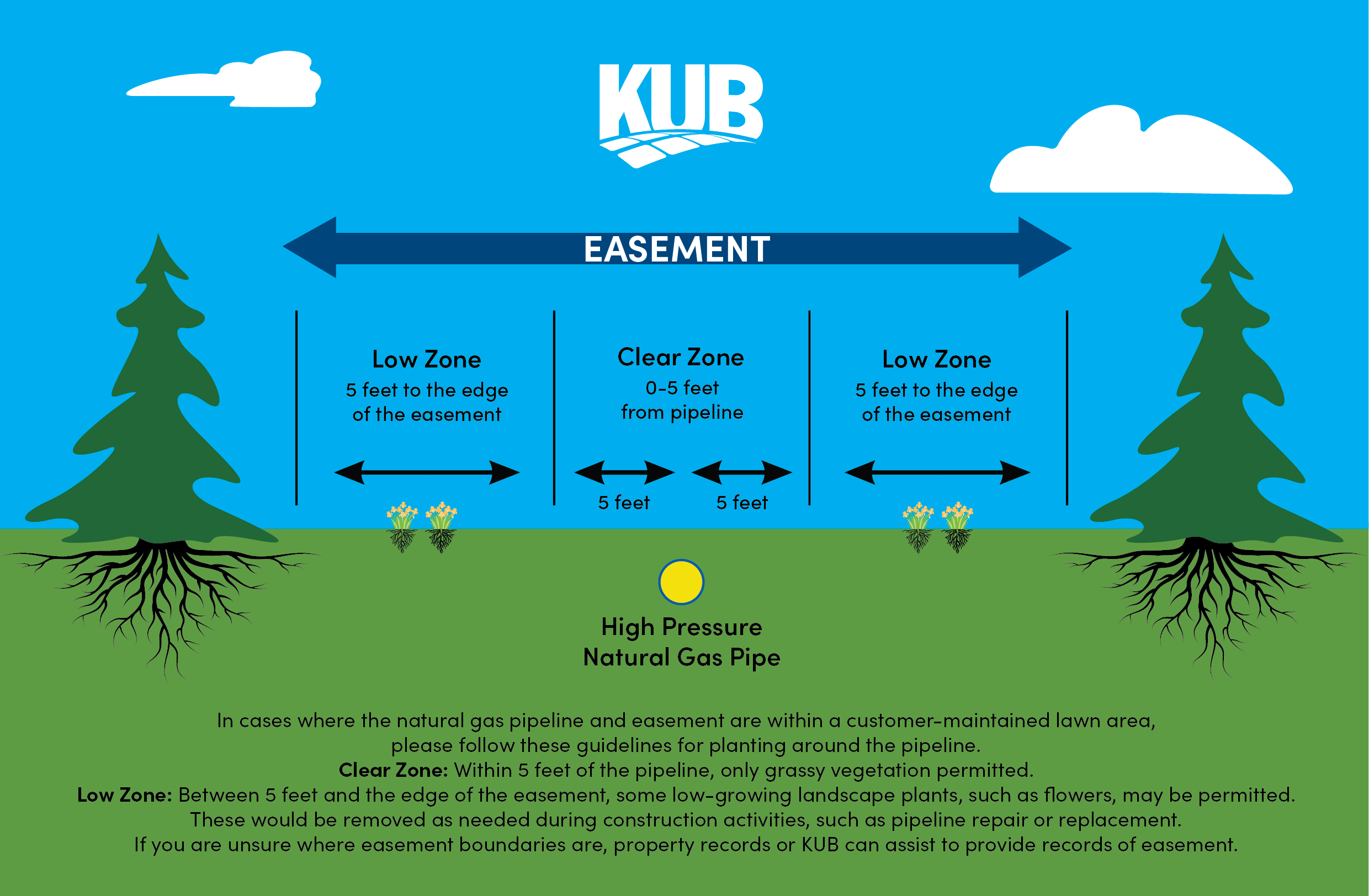
Learn More About Planting Near Natural Gas Mains
Call Before You Dig
Tennessee law requires homeowners to call 811 at least three business days before they dig to have underground utilities marked for free.
Dig-ins on underground utility lines can be dangerous to customers and to crews who must make repairs, and repairs are costly. Damage to the lines can also disrupt service to entire neighborhoods.
Plant Smart
- Choose the right tree.
- Choose the right spot.
- Call 811 before you dig.
Avoid Damage to Underground Utilities
Customers can help prevent service interruptions by calling 811 before digging in their yard.
Learn MoreTree Pruning and Landscaping
Vegetation is one of the leading causes of service outages in KUB's service area. Proper pruning and landscaping helps prevent customer outages.
Learn More